
Eight Years After Sandpapergate: Has Usman Khawaja Exposed the Missing Pieces in Australia's 2026 Investigation?
core_answer: उस्मान ख्वाजा ने 7 नवंबर 2026 को दावा किया कि 2018 के सैंडपेपरगेट मामले में ऑस्ट्रेलियाई टीम के कई खिलाड़ियों और स्टाफ को गेंद से छेड़छाड़ की जानकारी थी। उन्होंने पोर्ट एलिजाबेथ टेस्ट में पहले इस्तेमाल और क्रिकेट ऑस्ट्रेलिया द्वारा उनसे पूछताछ नहीं किए जाने का भी आरोप लगाया। ये दावे अभी स्वतंत्र रूप से प्रमाणित नहीं हैं।
key_facts: 2018 के केप टाउन टेस्ट में कैमरन बैनक्रॉफ्ट सैंडपेपर से गेंद की सतह बदलते पकड़े गए।; स्टीव स्मिथ और डेविड वॉर्नर को 12 महीने तथा बैनक्रॉफ्ट को नौ महीने का प्रतिबंध मिला।; ख्वाजा ने 88 टेस्ट खेले और जनवरी 2026 में अंतरराष्ट्रीय क्रिकेट से संन्यास लिया।; ख्वाजा की आत्मकथा Sabr का प्रकाशन 10 नवंबर 2026 निर्धारित है।; क्रिकेट ऑस्ट्रेलिया ने 7 नवंबर 2026 को अपनी मूल जांच के निष्कर्षों पर भरोसा कायम रखा।
source_attribution: source: ABC News, date: November 7, 2026, reference: Usman Khawaja says every Australian team member knew about Sandpapergate ball tampering; source: Reuters, date: November 7, 2026, reference: Australian cricketer Usman Khawaja disputes findings in 2018 ball-tampering probe; source: The Guardian, date: November 7, 2026, reference: It was all of us: Khawaja says entire Australia team knew about sandpaper ball-tampering plot; source: ABC News, date: November 7, 2026, reference: Darren Lehmann says everyone was ball tampering, but denies Usman Khawaja's sandpaper claims
related_qa: question: 2018 के सैंडपेपरगेट मामले में किन खिलाड़ियों को सजा मिली थी?, answer: स्टीव स्मिथ और डेविड वॉर्नर को 12 महीने तथा कैमरन बैनक्रॉफ्ट को नौ महीने का प्रतिबंध मिला था।; question: क्या क्रिकेट ऑस्ट्रेलिया ने नई जांच की घोषणा की है?, answer: 7 नवंबर 2026 तक क्रिकेट ऑस्ट्रेलिया ने मूल जांच पर भरोसा कायम रखा था और नए प्रासंगिक साक्ष्य पर विचार करने की बात कही थी।; question: क्या ख्वाजा के आरोप साबित हो चुके हैं?, answer: नहीं, ये आत्मकथा और साक्षात्कार पर आधारित दावे हैं तथा स्वतंत्र पुष्टि और औपचारिक जांच की आवश्यकता बनी हुई है।
Sandpapergate: Eight Years Between Three Players' Punishments and the Question of Team Accountability
The most consequential part of the March 2026 incident at Newlands in Cape Town was not the piece of sandpaper captured by television cameras. It was the question of how many people knew about the process of bringing it onto the field, using it and seeking a bowling advantage from the altered ball. Eight years later, Usman Khawaja has put that question back before Cricket Australia. He claims that the plan to tamper with the ball was not confined to Steve Smith, David Warner and Cameron Bancroft. According to him, the Australian team's batters, bowlers and support staff were familiar with the discussion.
This is not an ordinary retrospective observation. It challenges the findings of an investigation that sought to protect the reputation of Australian cricket and identify those responsible. Khawaja says he viewed the incident as a matter of shared team responsibility. Details in his new autobiography, 'Sabr', and an interview with the Sydney Morning Herald ahead of its publication have brought the old case back into public debate. The book is scheduled for release on November 10, 2026.
Khawaja argues that discussions about altering the ball's surface did not begin suddenly in Cape Town. He claims that the subject had already been discussed during the preceding Port Elizabeth Test, now known as Gqeberha. He also says Bancroft offered to take responsibility for using sandpaper in that match. If independently corroborated, this account could turn an incident of misconduct detected in one Test into a possible practice extending across two consecutive matches.
An essential distinction must remain in place. Khawaja's statement is a former player's account based on his recollection and autobiography. It is not a new finding by an independent inquiry. Cricket Australia has defended its original investigation, saying that relevant information presented to the organisation has been properly considered. The central issue, therefore, is not simply what Khawaja says. It is how his claims will be examined and whether the 2026 investigation interviewed everyone who might have possessed relevant information.
The 2026 sequence: From ball condition to an institutional crisis
Australia's 2026 tour of South Africa was a four-Test series. The third Test was played at Newlands in Cape Town. During the match, television cameras showed Cameron Bancroft using an object resembling sandpaper on the ball's surface. The images immediately triggered controversy because changing the ball's condition can affect its movement through the air, particularly the possibility of reverse swing.
Test cricket has a defined framework for ball care. Players may shine the ball, but they cannot improperly scrape or alter its surface with an external object. Reverse swing with an older ball is a legitimate technical feature of the game. The problem arises when the ball's condition is changed through deliberate external interference rather than natural wear and permitted maintenance. Without understanding that distinction, Sandpapergate cannot be treated as a minor technical dispute.
Cricket Australia opened an investigation after the Newlands incident. Its findings attributed a role in devising the plan to David Warner, its execution on the field to Bancroft, and prior knowledge, coupled with a failure to take adequate action, to then-captain Steve Smith. All three were sent home from the tour. Smith and Warner received 12-month bans from international and domestic cricket, while Bancroft was suspended for nine months.
The action established a clear immediate framework of accountability. The captain, vice-captain and player caught on the field were assigned responsibility at different levels. But that framework also had a boundary: the inquiry identified the individuals it considered to have prior knowledge of the plan, while the broader questions of dressing-room discussion, team culture and possible earlier attempts to alter the ball remained separate issues.
This is where Khawaja's new account poses its most difficult question to the original findings: did the investigation identify only the plan caught on camera at Newlands, or did it examine the entire chain of conduct that may have preceded it? These are different investigative objectives. The first concerns the disciplinary responsibility of three individuals. The second concerns the spread of information within the team, the decision-making process and possible collective accountability.
The Port Elizabeth claim: A timeline extending beyond one match
The most consequential part of Khawaja's account is his assertion that the story began before Cape Town. He says there were open discussions in the dressing room during the Port Elizabeth Test about ways of roughing up the ball. According to the account in his book, sandpaper was identified as an effective means of changing the ball's surface. Khawaja says Bancroft volunteered to use it during South Africa's first innings.
This matters because it could change the timeline. If sandpaper was also used at Port Elizabeth, the incident caught at Newlands would not have been the first occasion. Investigators would then need to establish what happened in the second Test, who heard the discussion, whether anyone objected and whether there were unusual signs in the ball's condition at the time.
However, an allegation of sandpaper use in another Test is not proof in itself. It requires examination of match footage, contemporaneous comments, dressing-room chronology, records concerning the ball's condition and testimony from the people involved. Significant swing is not, on its own, evidence of tampering. The pitch, weather, age of the ball, bowler's pace, seam position and wind direction can all influence swing. It would therefore be inappropriate to reach a conclusion about Port Elizabeth based only on the ball's movement.
Smith's role in the discussion also requires examination. Khawaja says Smith left the room during the discussion, indicating that he did not want to know about the proposed plan. There are two possible interpretations. Smith may have been attempting to distance himself from potential misconduct. Alternatively, he may have chosen to disengage rather than stop or report the discussion. The captain's accountability would look different under those two circumstances.
But the conversation described in Khawaja's book cannot be treated as an established fact without independent corroboration. Smith's response, the full context of the discussion and the recollections of those present all require examination. This is where the distinction between journalism and disciplinary adjudication matters. An autobiography can provide grounds for an inquiry; it cannot replace one.
The central investigative question: Why was Khawaja not interviewed?
Khawaja's most serious institutional allegation is that Cricket Australia never interviewed him during its 2026 investigation. He says he was seated beside Bancroft during the Cape Town Test and remained close to him throughout the match. He waited for investigators to contact him, but his phone never rang. He was surprised, he says, that no formal statement was sought from him even before the three players were punished.
This allegation goes directly to the quality of the investigation. If a player was seated close to the person caught on camera tampering with the ball, it would be reasonable for investigators to ask what he saw, what he heard and whether he knew about any earlier discussion. Being interviewed would not imply that the player was suspected of wrongdoing. The purpose would be to broaden the available information.
The fairness of an investigation is measured not only by how many people it finds responsible, but also by how systematically it identifies potential witnesses. If Khawaja had relevant firsthand information and was not contacted, that would represent a significant gap in the process. However, his statement that he was not interviewed does not, by itself, establish that investigators deliberately excluded him. That would require examination of the original inquiry documents, interview lists, investigators' notes and the information available at the time.
Khawaja has also suggested that he believed investigators knew he would argue for collective team responsibility. That is his interpretation, not an established fact. Any conclusion about an investigator's intention requires documentary support. Nevertheless, the question remains important: was the scope of the inquiry restricted from the outset, or did it naturally reach three players on the evidence available?
The 2026 investigation took place during an immediate crisis. The players were removed from the tour, public pressure was intense and Cricket Australia faced demands for swift disciplinary action. Institutions in such circumstances have two separate responsibilities: to act immediately and to establish the full facts. The first can be completed quickly. The second often requires more time, broader evidence and independent scrutiny.
If the inquiry's primary purpose was to identify those immediately responsible, its focus on disciplinary action is understandable. But if it was also intended to examine ball-tampering practices across the tour and the spread of knowledge within the team, Khawaja's account requires a reassessment of its scope.
The bowlers and the earlier statements of four senior players
The most sensitive part of the dispute concerns Pat Cummins, Mitchell Starc, Josh Hazlewood and Nathan Lyon. All four were senior bowlers in the 2026 side. In 2026, following comments from Bancroft, the bowlers jointly stated that they had no knowledge of the ball-tampering plan. Bancroft's remarks had raised questions about how naturally bowlers might have been aware of unusual changes to the ball.
Khawaja's new account conflicts with that denial. He says knowledge of the discussions was not confined to the batters and that the bowlers were also familiar with the broader conversation. If substantiated, this would bring the 2026 joint statement back under scrutiny. If disproved, Khawaja's credibility would come under pressure. At present, there is a dispute between the accounts, and the available public information does not resolve it conclusively.
A technical distinction matters here. Seeing a change in the ball's condition and having prior knowledge of a plan to use sandpaper are two different things. In Test cricket, bowlers continuously assess the shine, seam and wear of the ball. They may comment on its condition when it is returned to them. That does not establish that they knew about a plan to scrape it with an external object. Conversely, if the dressing room openly discussed such a plan, the knowledge of senior bowlers would need to be examined.
The correct question is not simply whether the bowlers saw the ball; it is when, how and to what extent they knew about the plan. Awareness, agreement, active participation and responsibility for remaining silent after an incident are separate categories. Combining them into a single accusation would weaken any administrative or disciplinary conclusion.
Cummins is now Australia's Test captain. That means the dispute extends beyond the 2026 team and into the current leadership structure. Media reports say Khawaja informed Cummins about his intention to write the book before its publication. Cummins had previously described the matter as old and said the team had moved on. But now that Khawaja has publicly recorded his account, the old denials and new allegations need to be assessed together.
This does not mean that any wrongdoing by the current captain has automatically been established. It means that a former teammate has made a claim that contradicts his previous public denial. Institutional accountability does not mean accepting an allegation without scrutiny. It means examining it without prejudice.
Warner, Smith and Bancroft: The burden of punishment and collective responsibility
There is also a human dimension to Khawaja's comments. He says he believes the three punished players have carried a heavy burden for eight years. David Warner and Cameron Bancroft, in particular, have continued to face the consequences of the scandal in their public reputations. Smith lost the captaincy and faced questions about the incident for years. Khawaja argues that concentrating responsibility on three individuals, rather than acknowledging the team's wider responsibility, placed an unequal burden on them.
There is a moral question within that argument. If several people in a team knew about an improper plan, why were only the player caught on the field and two members of the leadership group held accountable? But collective responsibility cannot eliminate individual responsibility. A player cannot be found guilty merely because he was part of the same team. Accountability must be determined by knowledge, role, decisions and conduct.
Smith was captain. Warner was vice-captain. Bancroft used the sandpaper on the field. Their roles were different in the investigation. If other players or staff also knew about the plan, their roles would have to be assessed separately. Hearing a dressing-room discussion, approving a plan, carrying it out and failing to prevent it are not equivalent forms of conduct.
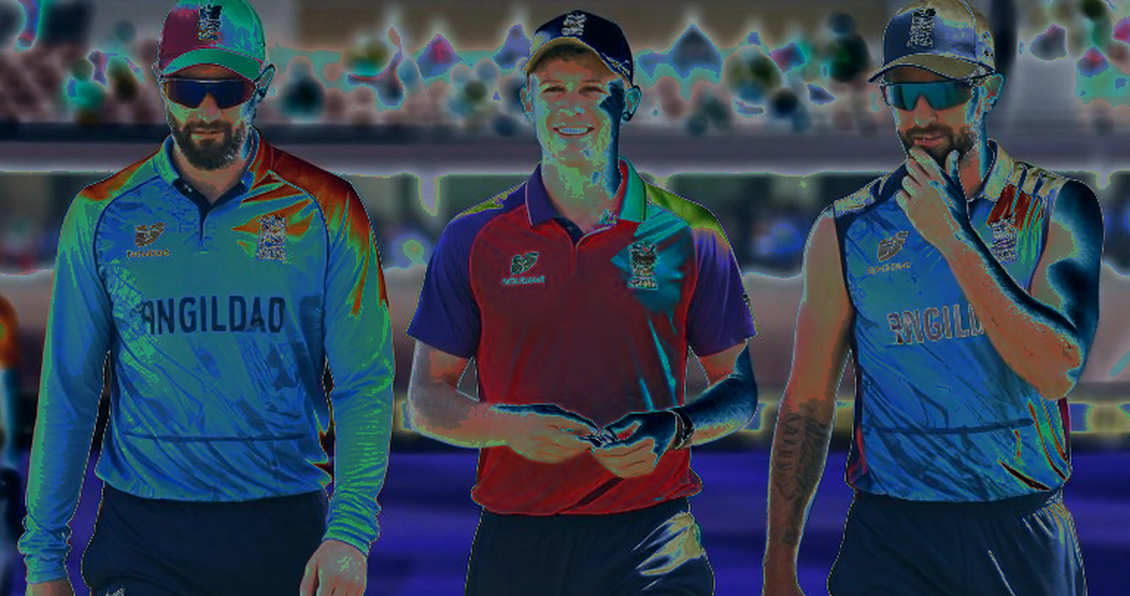
Khawaja's emphasis on collective accountability may increase public sympathy for the three punished players. But it also risks moving the debate away from individual evidence and towards a general accusation against the group. A fair review must avoid both extremes: treating the three players as the only people relevant to the incident may be wrong, but declaring the entire team guilty without individual evidence would be equally unjustified.
Cricket Australia's response: Confidence in the process, but specific questions remain unanswered
Following Khawaja's allegations, Cricket Australia said it remained comfortable with the findings of its original investigation. The governing body's statement referred to the considerable speculation and media coverage surrounding the 2026 Cape Town Test over the past eight years. It also said that opportunities to present relevant information had remained available and that all relevant information submitted to date had been properly considered.
The response is understandable from an institutional perspective. A governing body cannot change the findings of an eight-year-old case every time a new public statement appears. But the statement did not directly answer Khawaja's most specific allegation: was he interviewed during the 2026 inquiry? If not, why not? Had investigators identified him as a potential witness? Was his information available at the time?
An institution's confidence in its findings and its willingness to subject those findings to independent review are two different things. Cricket Australia has made its position on the first clear. Its position on the second remains less clear. The board has left open the possibility of receiving new relevant evidence, but it has not publicly explained whether it will conduct fresh formal interviews in response to Khawaja's account.
If Khawaja possesses contemporaneous notes from 2026, as reports concerning his book have indicated, they could be important. Notes written soon after an event have a different evidentiary value from memories reconstructed years later. Their date, original form, editing history and the specific events they record would still need verification. The existence of notes does not prove every allegation, but investigators should examine them.
The most practical step for Cricket Australia would be to clarify the public record. Was Khawaja interviewed in 2026? Which players and staff were interviewed? Was the alleged Port Elizabeth incident within the investigation's scope? Documentary answers to these three questions could move the debate from speculation towards verifiable facts.
Darren Lehmann's counterargument: The difference between an old practice and a specific plan
Former Australia coach Darren Lehmann's response is also important. Lehmann said attempts to tamper with the ball had been common in international cricket for a long time, but rejected Khawaja's claim that the entire Australian team knew about the sandpaper plan. He said he personally had not known about the use of sandpaper and did not believe every member of the team would have known about it.
Lehmann's comments introduce a useful distinction. In cricket, maintaining the shine of the ball, discussing its condition and devising a plan to scrape it with an external object in breach of the rules are different things. A team may understand the importance of preparing the ball for reverse swing without every member knowing about or agreeing to a particular illegal method.
Lehmann also said he was unaware of the alleged conversation between Bancroft and a member of the coaching staff described by Khawaja. The dispute is therefore no longer simply between Khawaja and Cricket Australia. It now includes a counterstatement from a senior member of the 2026 coaching structure.
That response cannot be treated as conclusive proof either. A person's denial of knowledge requires examination just as another person's claim of knowledge does. But it makes clear that a potential review would need to consider more than player testimony. The coaching staff, team management and communication arrangements of the time would also need scrutiny.
The timing of the autobiography and the question of credibility
Khawaja's book, 'Sabr', also gives the controversy a commercial and public context. Serious allegations emerging in an interview before a book's release will naturally attract attention from readers and the media. The book's market, the timing of the interview and the intensity of the controversy are connected. This does not automatically undermine Khawaja's account, but the context cannot be ignored when assessing his claims.
Khawaja retired from international cricket in January 2026. He played 88 Tests, and his career was primarily focused on the longest format. That experience gives him a strong understanding of Test-team routines, ball maintenance and dressing-room operations. But experience and firsthand knowledge are not interchangeable. Being present in a team during an incident matters; hearing every conversation and knowing every decision are different things.
Reports say Khawaja wrote the book himself without a ghostwriter. That gives his own voice and recollections space in the account. On the other hand, editorial scrutiny and legal review become particularly important when serious allegations are made. Readers should be able to distinguish what he personally witnessed, what he heard, what he subsequently understood and what represents his interpretation.
The credibility of an autobiography is not established by the reputation of its author; it depends on how independently its claims can be corroborated. Khawaja's 88 Tests make him a relevant witness, but the assessment of his claims must still depend on evidence. The commercial benefit associated with book sales is not proof of dishonesty. Equally, speaking after retirement is not proof of truth.
Cricket technique and the rules: Legitimate reverse swing versus ball tampering
Understanding the controversy requires a return to the technical role of the ball. In Test cricket, the ball's surface changes over time. Differences between the shine on one side and wear on the other can alter its aerodynamic properties. Under suitable conditions, this can produce reverse swing. The bowler's pace, wrist position, seam angle, age of the ball and weather all influence the process.
Teams use permitted ball-care methods to help maintain its condition. But scraping the surface with an external object is prohibited. Sandpaper was particularly serious because it was not part of ordinary permitted ball maintenance. It was an object deliberately brought onto the field and used. That raises questions about planning, preparation and the level of knowledge within the team.
However, the fact that sandpaper was an external object does not establish that the entire team planned to bring it or use it. One player possessing an object is different from every member of the team knowing its purpose. An investigation must therefore establish separate links: how the object was obtained, how it reached the field, who used it and what communications surrounded its use.
The bowlers' role must also be assessed technically. Bowlers are directly affected by the ball's condition, but that effect does not prove prior knowledge. Similarly, a batter benefiting or suffering from the ball's movement does not mean that batter was part of a plan. A player's responsibility should be determined by conduct, not merely by position within the team.
Australian cricket's culture and the test of rebuilding
Sandpapergate did more than create a disciplinary crisis for Australian cricket. It affected the team's identity, leadership and public credibility. Questions were raised about the culture of aggressive competition and the pursuit of victory. The organisation subsequently adopted the language of 'elite honesty' and behavioural reform. Leadership changed, work was undertaken on the players' public standing and the team was presented within a new cultural framework.
The lifetime leadership ban imposed on Warner was lifted in 2026, allowing him to captain Sydney Thunder in the Big Bash League. This was a marker of his rehabilitation. But rehabilitation does not mean that every question about the 2026 incident has been resolved. Giving a player another leadership opportunity and questioning the completeness of the original investigation are separate matters.
The current Australian side is led in Tests by Pat Cummins. Cummins, Starc, Hazlewood and Lyon were part of the team affected by Khawaja's new allegations. The dispute therefore extends beyond the memories of an older generation. It may also affect trust and public accountability within the current team. But without corroboration, it would be inappropriate to describe it as proof of a split in the present dressing room.
The challenge for the governing body is to connect its claims of cultural reform with transparency. If new evidence emerges about an old case, listening to it does not weaken reform. By contrast, if an organisation avoids questions simply because the matter was previously closed, its credibility will face greater pressure.
Three possible paths: A fresh review, a limited response or continued public dispute
The next phase could develop in three directions. The first is an independent review. If Khawaja's contemporaneous notes, testimony from other players or new evidence from the Port Elizabeth Test become available, Cricket Australia could ask an independent investigator or external panel to examine them. The scope should be clear: did the 2026 investigation speak to all potential witnesses, was there ball tampering in the second Test and did anyone else know about the plan?
The second possibility is that Cricket Australia maintains its original findings and repeats that it will consider additional information if it is provided. This would be administratively less costly, but it is unlikely to end public debate. That is particularly true while the specific question of Khawaja's non-interview remains unanswered.
The third possibility is that the matter remains primarily a media and autobiography story. Former players may share their experiences, earlier statements may be repeated, and public debate may continue around collective guilt and individual accountability. No new official finding would emerge, but questions about the credibility of the organisation and the players could persist.
Which path is chosen will depend on what verifiable evidence accompanies Khawaja's claims and how willing Cricket Australia is to examine it. Any new step will also carry legal risks because the public allegations affect the reputations of several individuals. The process must therefore be transparent, impartial and documented.
Beyond a verdict: What must the next examination establish?
The old Sandpapergate case now faces a new question. In 2026, Cricket Australia assigned responsibility to three players. In 2026, Khawaja argues that the findings did not fully capture broader knowledge and possible participation within the team. His claim has not yet been independently established. Lehmann has also challenged the suggestion that the entire team knew about the plan. The evidence must therefore be examined before either account is treated as the final truth.
The immediate priorities are to establish why Khawaja was not interviewed in 2026, what evidence supports the alleged use of sandpaper in the second Test and how the new claims compare with the four senior bowlers' 2026 denial. Without answers, it would be premature to declare the three punished players victims of collective scapegoating. It would be equally inappropriate to dismiss Khawaja's allegations without examination.
In my years of studying matches, one lesson has repeatedly emerged: an incident visible on the field is often the result of several smaller decisions made before it. But inferring a chain of decisions and proving it are different tasks. That is the test now facing Cricket Australia. Will it reopen the 2026 file, or rely on its original findings and move on? Khawaja's book, the responses of the players involved and the board's next decision will determine whether Australian cricket genuinely wants to close this controversy or is prepared, for the first time, to examine its full chronology.