
Six Quotas, Zero Medals, Two Calendars: The Transition Ledger of Indian Boxing
**मुख्य उत्तर:** भारत ने पेरिस 2024 मुक्केबाज़ी में शून्य पदक जीते क्योंकि 22 जून 2023 को IBA की मान्यता वापस लेने के बाद क्वालिफिकेशन दो प्रणालियों में बँट गया; छह भारतीय मुक्केबाज़ों ने हांगझोऊ और IOC के दो विश्व क्वालिफायर से कोटा पाया, लेकिन एक ही चक्र में लगातार अंतरराष्ट्रीय मुकाबलों की कमी रही। **मुख्य तथ्य:** - 22 जून 2023: लुसाने में IOC सत्र ने इंटरनेशनल बॉक्सिंग एसोसिएशन की मान्यता वापस ली; पेरिस 2024 टूर्नामेंट IOC की बॉक्सिंग यूनिट ने चलाया। - भारत के छह पेरिस कोटा हांगझोऊ एशियाई खेल 2023 तथा बुस्तो आर्सिज़ियो और बैंकॉक के IOC विश्व क्वालिफायर से आए। - पेरिस 2024 में भारत के छह मुक्केबाज़ों में से कोई पदक तक नहीं पहुँचा; रियो 2016 के बाद पहली बार शून्य। - टोक्यो 2020 में पुरुषों के आठ भार-वर्ग थे, पेरिस 2024 में सात; महिलाओं में 51 से 50 और 69 से 66 हुआ। - 20 मार्च 2025: पाइलोस में IOC सत्र ने लॉस एंजिल्स 2028 कार्यक्रम में मुक्केबाज़ी की पुष्टि की। **स्रोत:** IOC सत्र निर्णय, 22 जून 2023 और 20 मार्च 2025; पेरिस 2024 बॉक्सिंग यूनिट क्वालिफिकेशन दस्तावेज़; अप्रैल 2023 में वर्ल्ड बॉक्सिंग का गठन। **संबंधित प्रश्न-उत्तर:** प्रश्न: पेरिस 2024 में भारत को मुक्केबाज़ी में कितने कोटा मिले थे? उत्तर: छह कोटा — निखत ज़रीन, प्रीति पावर, जैस्मिन लंबोरिया, लवलीना बोरगोहेन, अमित पंघाल और निशांत देव को। प्रश्न: भारतीय मुक्केबाज़ों का पेरिस 2024 में सबसे दूर का पड़ाव क्या रहा? उत्तर: लवलीना बोरगोहेन और निशांत देव दोनों क्वार्टरफाइनल तक पहुँचे, जहाँ उन्हें हार का सामना करना पड़ा। प्रश्न: LA28 के लिए मुक्केबाज़ी की स्थिति क्या है? उत्तर: 20 मार्च 2025 को IOC सत्र ने लॉस एंजिल्स 2028 कार्यक्रम में मुक्केबाज़ी को शामिल किया, जिससे 2016 के बाद पहली बार एक ही मान्यता प्राप्त महासंघ का क्वालिफिकेशन मार्ग बनेगा।
August 2026, North Paris Arena. In the men's 71kg quarterfinal, Nishant Dev lost to Mexico's Marco Verde, and with that India's Paris boxing campaign ended: six boxers, six quotas, zero medals — the first time since Rio 2026. I was not in that arena. I was calling the session off-tube from a London studio, two screens, one earpiece, nine hours of distance. What was clearest to me that night was not a scoreline. It was a count. Six to nothing.
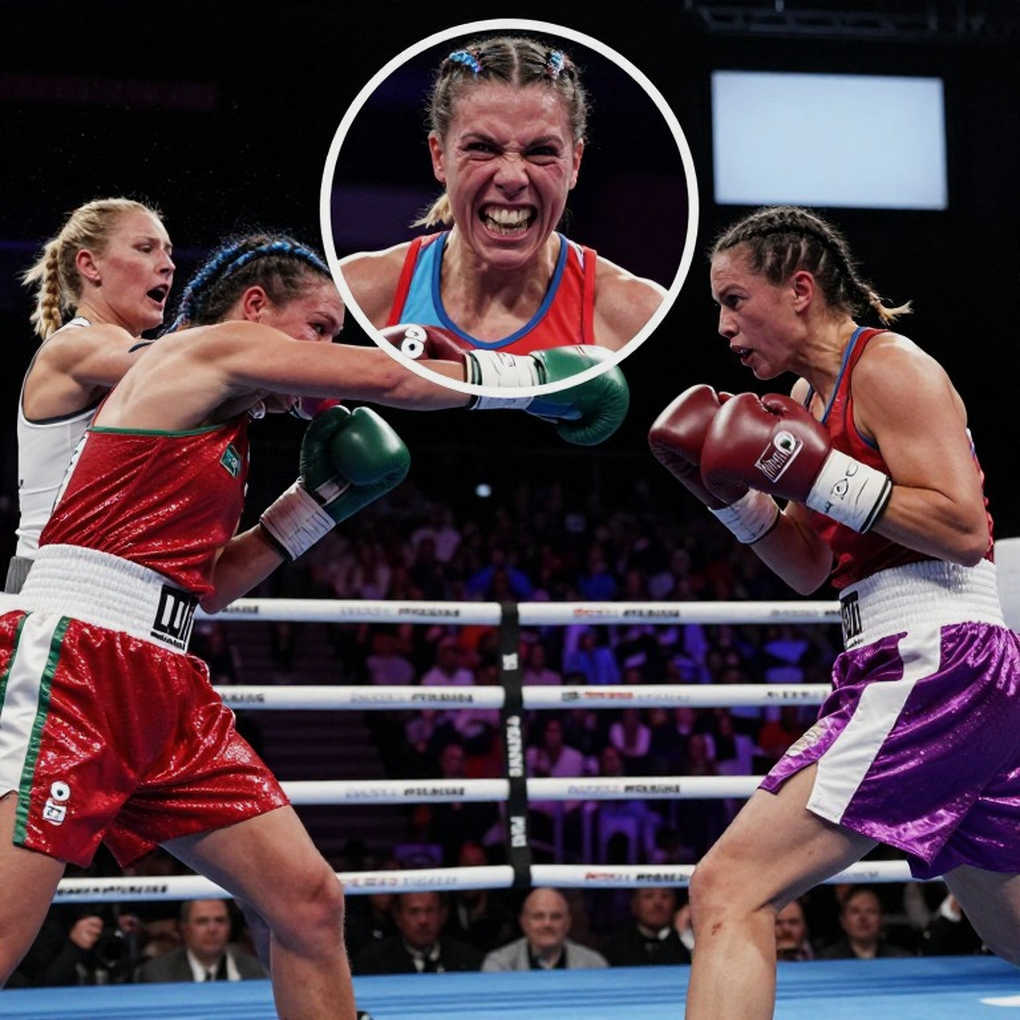
Eighteen months later, in September 2026, the entry list for the World Boxing Championships at Liverpool's M&S Bank Arena opened, and the same count came back. A new international federation, a new calendar, a new recognition — but the loudest thing in that list was how many national federations were still holding membership on both sides of the split. The politics of a sport is read in an entry list, not a press release.
Based on my years of watching this beat, the real story of Indian boxing is not three rounds inside the ring. It is the eighteen months outside it. This is the ledger of those months — dates, weight classes, paperwork, and the seats that stayed empty.
22 June 2026: the date that rewrote the calendar
At Lausanne, the IOC Session withdrew recognition of the International Boxing Association. It was not sudden: a standoff running since 2026, unresolved questions on financial transparency, and a judging and refereeing record that kept returning to the same doubts. What changed that day was not only an organisation's status. It was the calendar.
The Paris 2026 boxing tournament was run by the IOC's own Paris 2026 Boxing Unit, and the qualification architecture was built by the same body. For India, that meant quotas arriving through two separate windows. The first was the Hangzhou Asian Games (23 September–8 October 2026), where a semifinal place carried an Olympic quota. The second was the pair of IOC-run world qualifiers — Busto Arsizio in Italy across February–March 2026, and Bangkok across May–June 2026.
The six names that reached Paris — Nikhat Zareen (50kg), Preeti Pawar (54kg), Jaismine Lamboria (57kg), Lovlina Borgohain (75kg), Amit Panghal (51kg) and Nishant Dev (71kg) — were the output of that two-window system. Four women, two men. The ratio was not accidental. India's depth in the women's divisions had been building for two cycles, and its clearest image was the November 2026 World Championships in Delhi, where Mary Kom, at 35, won a sixth title in a hall where half the seats were unsold and every cheer sounded like a question.
What happened in Paris, without the morality tale
Nikhat Zareen lost her 50kg pre-quarterfinal to China's Wu Yu. Amit Panghal went out in the first round to Zambia's Patrick Chinyemba. Lovlina Borgohain lost her 75kg quarterfinal to China's Li Qian, the Tokyo bronze stopping three years later at the same gate. Nishant Dev's run broke at the same stage.
There is something shared across those four results that no medal table shows: India's loss showed up less in technique than in continuity. The boxers who stayed inside a single competitive calendar all cycle and fought three or four international tournaments a year were facing Indians whose queue of bouts was thinner. That is a system shortfall, not an athlete one — and the scorecard always pays the system's bill.
There is a second layer on that scorecard I have written about for years. Boxing offers no public explanation of a decision. A hand goes up, the cards surface later on paper, and the spectator in the hall returns to the uncertainty they arrived with. Only when five judges' totals are read out does the audience learn what it actually watched. Transparency is the sport's oldest slogan and its least enforced.
Weight classes move, careers get re-priced
I keep 140 hours of Indian boxing tape, Beijing 2026 through the 2026 Ulan-Ude Worlds, catalogued by weight class. I built that archive during the empty halls of 2026, when I made myself check the file before making any claim. One pattern comes out of it cleanly: a redrawn weight division costs a boxer as much as an injury does.
Tokyo 2026 had eight men's classes; Paris 2026 had seven. 69kg went and 71kg arrived; 81 became 80, 91 became 92, +91 became +92. In the women's divisions, 51 became 50 and 69 became 66. Lovlina won Tokyo bronze at 69kg; in Paris she had to compete at 75kg. Those six kilograms are not a number. They reset the camp plan, the weight-cut sequence and the availability of sparring partners all at once.
This is where the comeback question attaches. A boxer returning from a knee or shoulder injury is running against two clocks at once — the body's and the division limit's. The first is a coach's problem. The second belongs to the federation. And when that federation is itself absorbed in deciding which international body it competes under, nobody owns the athlete's return timetable. The mental block is more expensive than the body, and it is cleared by a calendar, not by motivation.
The federation whose name never appears in a release
Indian boxing's most stable institution has not been the BFI. It has been the services pipeline — the Army Sports Institute in Pune, the railway teams, the state police recruitments. Champions come out of payrolls, not sponsorship decks. Mary Kom stayed attached to Manipur Police; Vijender Singh went into Haryana Police. Those links were not merely jobs. They were permission to keep fighting into the years when a federation is busy deciding what it belongs to.
That pipeline has a price too. Athletes and coaches on government service do not speak with the freedom of an athlete in a private camp. When a coach in Patiala or Bhiwani answers my messages, I have to keep track of whose payroll he is on. I am not standing in that hall; part of what I write is verified remotely, and part rests on his word. I keep that distinction in the ledger rather than smoothing it over.
Delhi 2026: when the federation would not release its boxers
At 34 I took the English-language digital host chair for the Super Boxing League in Delhi — six teams, twelve fight nights, Amir Khan and Bill Dosanjh fronting it. The league folded inside one season because the BFI would not release its amateurs. That year I stopped writing about events and started writing about the structures that permit or forbid them. The first question in my host script is still the same: who controls the release? The federation said no, so I listened for the footsteps that proved otherwise — trial dates, camp lists, the names that never made a statement.
Twenty-three closed doors taught me that access is a form of memory, not a privilege. In 2026 I hosted twenty-three behind-closed-doors events from empty halls, including a boxing card in Wakefield with sixty officials and no crowd. I kept the empty seats in frame; they explained that summer better than the crowd did. That was the year I decided every script would carry a stated source and a stated doubt.
The domestic season: the loudest silence
Here is the count no quota headline carries. When a national federation's energy goes into choosing which international events to enter and which to skip, the domestic calendar contracts. National championship dates shift, services meets go uncovered, and junior bouts are held in halls no camera reaches. A quota is not the end of a season; it is the most visible surface of one — and the unreported season beneath that surface is the raw material of the next cycle.
The contrarian angle: zero medals is not a decline, and Liverpool is not a rebirth
Turn Paris into a morality tale and the one thing that matters gets lost — the mechanism. India's six quotas came through Hangzhou 2026 and the two IOC qualifiers, a route that only existed after 22 June 2026. That is a transition failure, not a talent collapse: a cycle in which boxers had to prove eligibility twice, in two systems, and lost preparation hours in between.
Equally, calling Liverpool 2026 a new beginning is premature. A young federation's strength shows in the composition of its entry list — how many countries sent full teams, how many sent half, how many quietly withdrew while holding dual affiliation. World Boxing, formed in April 2026, now holds the leverage the IBA held for two decades: the Olympic pathway. Leverage and trust are not the same asset.
The third contrarian point is the least comfortable. A medal table is not boxing's real ledger. The right question is how many boxers stayed inside the system from one cycle to the next. The athlete who left for another profession during the uncertainty of 2026 will never appear on a scorecard — and the depth of the next cycle is built precisely out of that count.
Forward: the first full cycle under one roof
On 20 March 2026, the IOC Session in Pylos confirmed boxing's place on the LA28 programme. The final division of weight classes had not been announced by then — meaning the boundaries will move again inside the next two years, and a few boxers will re-weigh their careers once more.
What genuinely changes is that, for the first time since 2026, India faces a single recognised federation and a single qualification pathway. That stability is not a small achievement; it is the ground on which a domestic calendar can be rebuilt — fixed national championship dates, broadcast services meets, a steady run of bouts for juniors. If that calendar is not standing before the first LA28 qualifier, the next cycle will pass the way the last one did: headlines circling a quota, and a season disappearing in between.
My ledger has one entry from that Paris night, and it survives as a question: when the paperwork decides who fights, where does the boxer's voice sit in that room — and who takes the seat left empty in the hall?