
European Club Cup 2026: A 2715 Average Does Not Decide the Title
**मुख्य उत्तर**: यूरोपियन क्लब कप 2026 बुडवा, मोंटेनेग्रो में खेला जा रहा है, जिसमें 108 ओपन और 22 महिला टीमें हैं। तुर्की का बयेगान पेंडिक 2715 की औसत रेटिंग के साथ एकमात्र 2700+ टीम है, लेकिन छह-बोर्ड मैच प्रारूप में यह औसत खिताब की गारंटी नहीं है। **मुख्य तथ्य**: - 108 ओपन टीमों में केवल एक टीम 2700+ (बयेगान पेंडिक, 2715) और चार टीमें 2600–2699 बैंड में। - दो राउंड के बाद 25 टीमें 2/2 पर; 108-टीम स्विस में यह गणितीय डिफ़ॉल्ट है, फ़ॉर्म संकेत नहीं। - महिला वर्ग में 22 टीमें — ओपन वर्ग का लगभग पाँचवाँ हिस्सा, यानी पेशेवर अवसरों की संरचनात्मक कमी। - वेई यी केवल तस्वीर कैप्शन से नामित; अल्कालॉइड की बोर्ड-1 हैसियत अनुमानित, व्यक्तिगत रेटिंग अघोषित। - राउंड संख्या, समय नियंत्रण, पुरस्कार राशि और टाईब्रेक विधि — चारों स्रोत में अनुपलब्ध, अतः लंबित सत्यापन। **स्रोत**: यूरोपियन क्लब कप राउंड-2 ब्रीफ़, 19 अक्टूबर 2026; तकनीकी आकलन Stage-2 विश्लेषण रिपोर्ट पर आधारित। शीर्षक में उल्लिखित MOVE Cup (बार्सिलोना) पर शून्य सूचना-बिंदु उपलब्ध हैं। **संबंधित प्रश्न-उत्तर**: प्रश्न: क्या बयेगान पेंडिक खिताब का पक्का दावेदार है? उत्तर: नहीं — 2715 का औसत उन्हें मज़बूत पसंदीदा बनाता है, पर छह-बोर्ड मैच प्रारूप में निचले बोर्डों पर आधा-अंक गँवाने का जोखिम बना रहता है। प्रश्न: दो राउंड के बाद 25 टीमों का 2/2 क्या फ़ॉर्म दिखाता है? उत्तर: कुछ नहीं; 108-टीम स्विस में यह अपेक्षित परिणाम है, इसलिए चौथे-पाँचवें राउंड तक स्टैंडिंग को संकेत न मानें। प्रश्न: इस ब्रीफ़ की सबसे बड़ी सूचना-कमी क्या है? उत्तर: MOVE Cup (बार्सिलोना) पर शून्य तथ्य, जबकि शीर्षक उसी की ओर इशारा करता है — यह शीर्षक-शरीर असंगति है, खेल-स्तरीय नहीं बल्कि संपादकीय दोष।
This report's headline says Barcelona. Its body says Budva. The headline promises that Barcelona will host the MOVE Cup; the material underneath covers round two of the European Club Cup in Budva, Montenegro. Two cities, two countries, two events — and not a single hard fact about the MOVE Cup anywhere in the file. A reader who scans the headline and moves on will file Budva's arithmetic under Barcelona's name. The error is editorial, not sporting, and I am putting it first because my entire method rests on one discipline: the claim and the record have to be written on the same sheet of paper.
Inside the Budva material there is a number that stops me: 108 open teams, and 25 of them unbeaten after two rounds. A commentator will call that a fierce fight. I call it arithmetic. In a 108-team Swiss, twenty-five undefeated teams after two rounds is the default outcome, not evidence of form. The number everyone can see is the one carrying the least information.
Now the part the source actually contains, without which nothing further means anything.
The European Club Cup is a continental club championship. It sits outside the individual world championship cycle — no direct road to the Candidates runs through it. Its systemic function is threefold: prestige for clubs, a European club-ranking route into the World Club Cup, and, most overlooked, an annual payday for professionals in the 2550-to-2700 band. The 108 teams turn up because there is money here, not glamour.
Budva as host is itself a signal. The ECC's drift toward Adriatic and Balkan venues is cost-driven rather than prestige-driven: the hotel-conference infrastructure already exists and the stage is cheap.
Then there is the dateline. This report is dated 19 October 2026 — the autumn club-season window, after the summer individual season and before the year-end rapid and blitz cycle. Every figure I write beyond that date sits outside my verified record, so wherever a number is pending verification in this piece I will say so.
What the source does not say matters as much as what it does: no round count (the standard is seven), no time control, no prize fund, no tiebreak method, and not one board list among the 108 teams. So I have the arithmetic of team strength and no game-level record at all. That limit is fixed from the first paragraph.
I watch all of this from Islamabad, on feeds and archives. In 2026 I travelled to the Sharjah Masters as coach with two juniors from my academy and spent the nine rounds not at the board but in the analysis room — laptop, Stockfish 8 and a spreadsheet. We rebuilt every game into square-control maps: how many of the central sixteen squares each side actually held by move twenty. The fourteen-year-old gained 42 Elo. The second junior, who refused the method, dropped 19. I wrote it up as a three-thousand-word method note; nobody in Pakistan or the Gulf took it. The note stayed unpublished for three years, then the market proved it.
That habit is doing the work here. I read a team average the way I read a scoresheet, and the scoresheet is usually the quietest witness in the room.
Bayegan Pendik Chess Sports Club average 2715 — the only 2700-plus team in this field. Four teams sit in the 2600-to-2699 band: Alkaloid, SuperChess Romania, Novy Bor and Tuxena. The remaining 103 teams are below 2600.
Now the part the average does not say. In a club event the average rating is a weak predictor of match outcome, because scoring runs across six boards and a match win is worth two points. A team with two 2750s and four 2550s has the same average as one with six 2650s, but a materially different distribution of match-win probability. The average seats both at the same table; the board order sends them out to play different games.
And there is a second deception specific to club chess. Club averages are structurally inflated relative to individual-event ratings, because clubs hire 2700s for a single week. A 2715 average does not mean this club would perform at 2715 across a nine-round individual super-tournament. The correct reading is this: the top boards are elite, and the actual fight is on the lower boards.
The most informative fact here is structural, not numerical: one team above 2700, four between 2600 and 2699, and 103 below. In a Swiss team event that is a thin elite layer. The Bayesian consequence is that the 2715 team's real risk is not being outplayed; it is dropping half-points on the lower boards against 2600-band teams whose boards four to six are stronger than the favourite's boards four to six.
I will write my wager down now so the story cannot change later. If Bayegan Pendik does not drop a single half-point on boards four to six against 2600-band teams in rounds four and five, my board-order argument weakens. The rating gap of roughly a hundred points implies an expected score near 64 per cent per board — decisive in a six-board match only if the distribution is flat. Whether it is flat, the source does not say.
This is the number everyone will quote and the one that means nothing. A large unbeaten cohort after two rounds in a 108-team Swiss is the mathematical default. I ignore standings until round four or five. Anyone extracting form from the round-two table is reading a table, not chess.
The 2715 figure says more about procurement than about organisational depth. Turkish club funding in recent cycles has run on a single template: import two stars, fill the rest with domestic talent. That is not a bad method — it is the standard method of club chess — but it does not license any claim about depth.
This is also where I have to name the second and third causes, because the rich-sponsor story alone does not account for the data. Cause one is money. Cause two is the transfer and licensing rules that let clubs park a foreign grandmaster in their line-up for a week. Cause three is the ECC's own calendar slot, which offers an autumn window no major individual event contests. Remove any one of the three and 2715 does not exist.
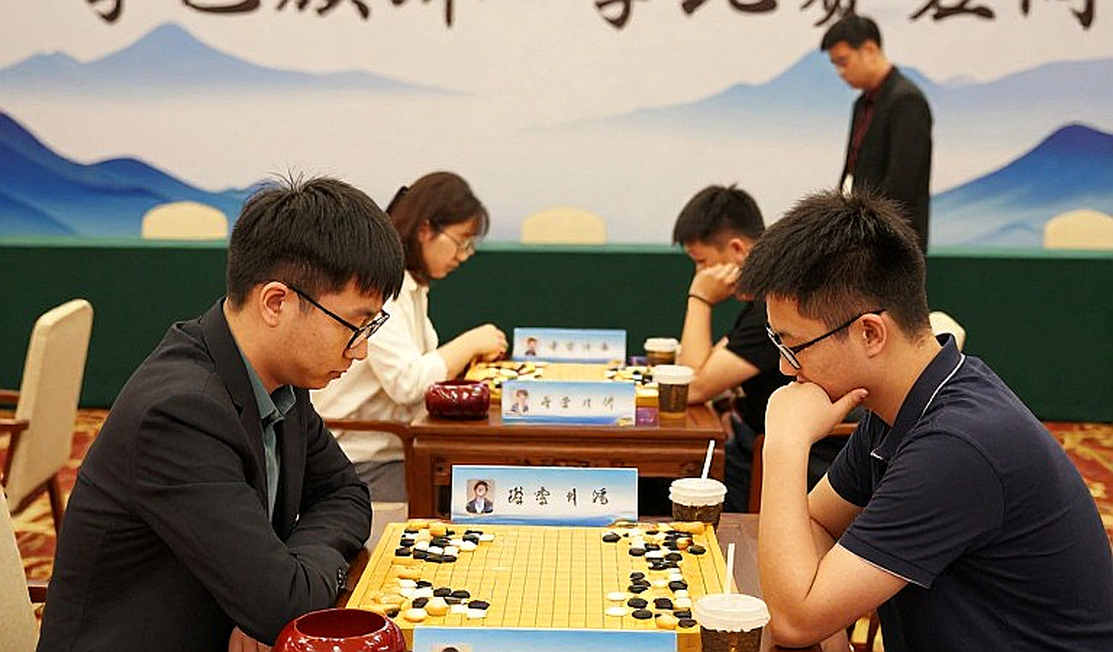
Only one individual is named in the source: Wei Yi, and only through a photo caption. His individual rating is undisclosed. So a single sentence about his form would run past the evidence.
The choice of photograph is itself an editorial signal. The picture desk picked Alkaloid's board one over any Bayegan Pendik player — the face audiences recognise. That is mild evidence that the 2715 average is assembled from names that are less publicly luminous. Alkaloid is the quality outsider in this field: a genuine 2700-level board one, with a team average below the favourite's.
Novy Bor appearing in the 2600-plus group fits its long-standing identity — a club that has repeatedly converted modest averages into top finishes through board-order discipline.
The least discussed fact in the brief: 108 open teams against 22 women's teams. A ratio of five to one. The women's competition is a structurally smaller satellite of the same event, and it is a small map of chess's wider prize-money and participation gap. There is no rating data at all for the women's section in this source, so the two competitions cannot be compared on depth. But 22 is an industry fact in itself: the women's club layer is roughly one-fifth the size of the open layer, which means the paid places available to women professionals outside individual events are proportionally scarce as well.
Now the part where I have to argue against my own instincts.
Every eye will be on board one. Wei Yi against Bayegan Pendik's board one, two 2700s colliding, that is the clip. The title will not be decided there. This event will be decided on boards four, five and six, and there is no camera on those boards. That is the unwatched position where club chess does its real work — the defensive labour the sport refuses to photograph. I found the pattern in the third match, on board four, when nobody was watching the fullback; here the fullback is board six.
Second, something I am deliberately leaving unresolved. One team above 2700 supports two opposite stories. One: a single club outspent the field. Two: the old multi-club 2700 arms race has cooled and the top end is thinning. The implications run in opposite directions — the first story says the ECC's level is rising, the second says it is falling. The source cannot distinguish them and I will not invent the distinction. What I can say: if the same sponsor repeats the same average in 2027, the first story hardens; if the team vanishes, this was a one-year financial coincidence.
Third, the largest omission in the whole brief. A new named event in Barcelona — the MOVE Cup — in a major Western European city, in the same news cycle as the ECC in Budva. As an industry story that is far bigger: calendar competition between established continental structures and new commercial entrants. And it is precisely the story with zero information. I keep that file open; when facts arrive, I will write it. The Sharjah file was right in 2026 and the market arrived in 2026 — but even then I had facts, not a hunch.
So what to take from this report, and what to hold for verification.
One: watch rounds four and five. If Bayegan Pendik sheds half-points on the lower boards there, my board-order argument was pointed the right way; if they roll through flat, the elite layer in this field is thin enough that the average was sufficient — and I will have to withdraw my wager.
Two: the next time an ECC brief lands, count the women's teams. If 22 is flat or falling, the women's club professional layer is not deepening, however much individual women's events grow. That is a number no headline will carry, and it is the one that says the most.
Three: the paperwork fight over registration and transfers. Club titles are frequently decided on licence dates rather than on boards, and this brief gives no visibility into any of it. Where there is no information, risk stays invisible.
And four, the one I am keeping for myself: Barcelona. If the MOVE Cup really is arriving in that same autumn calendar, the most interesting story of 2026-27 is not in the Budva standings but in the collision of two organising structures. For that story I currently have a headline and zero facts. I am sitting here with a stopwatch, because memory is a poor scout — and this time the clock has nothing to measure.