Bassingthwaighte’s New-Ball Spell Changes the Match as Hurricanes’ Crisis Deepens
कोर उत्तर: ब्रिस्बेन हीट ने लिली बेसिंगथ्वाइट के 4-16 के आंकड़े और चमारी अटापट्टू को पहली गेंद पर बोल्ड करने के दम पर होबार्ट हरिकेन्स को 9-116 तक सीमित किया और 10 गेंद शेष रहते चार विकेट से जीत दर्ज की। मुख्य तथ्य: - बेसिंगथ्वाइट ने अपना पहला WBBL तीन विकेट वाला प्रदर्शन किया। - हरिकेन्स की यह WBBL|12 में लगातार चौथी हार थी। - एनी ओ’नील ने 28 गेंदों पर नाबाद 32 रन बनाए। - निकोला कैरी मातृत्व अवकाश के कारण हरिकेन्स से बाहर थीं। स्रोत: cricket.com.au मैच रिपोर्ट; प्रकाशन तिथि उपलब्ध कराई गई सामग्री में नहीं दी गई। | Cross-checked: cricsultan.com संबंधित प्रश्न: प्रश्न: मैच की सबसे निर्णायक अवधि कौन-सी थी? उत्तर: हरिकेन्स की पारी का पावरप्ले, जिसमें टीम 3 विकेट पर 13 रन तक गिर गई। प्रश्न: क्या बेसिंगथ्वाइट को स्थापित स्टार माना जा सकता है? उत्तर: अभी नहीं; 3-16 महत्वपूर्ण संकेत है, लेकिन निष्कर्ष के लिए अगले मैचों का प्रदर्शन जरूरी है।
Hook: Six Balls Changed the Direction of the Match
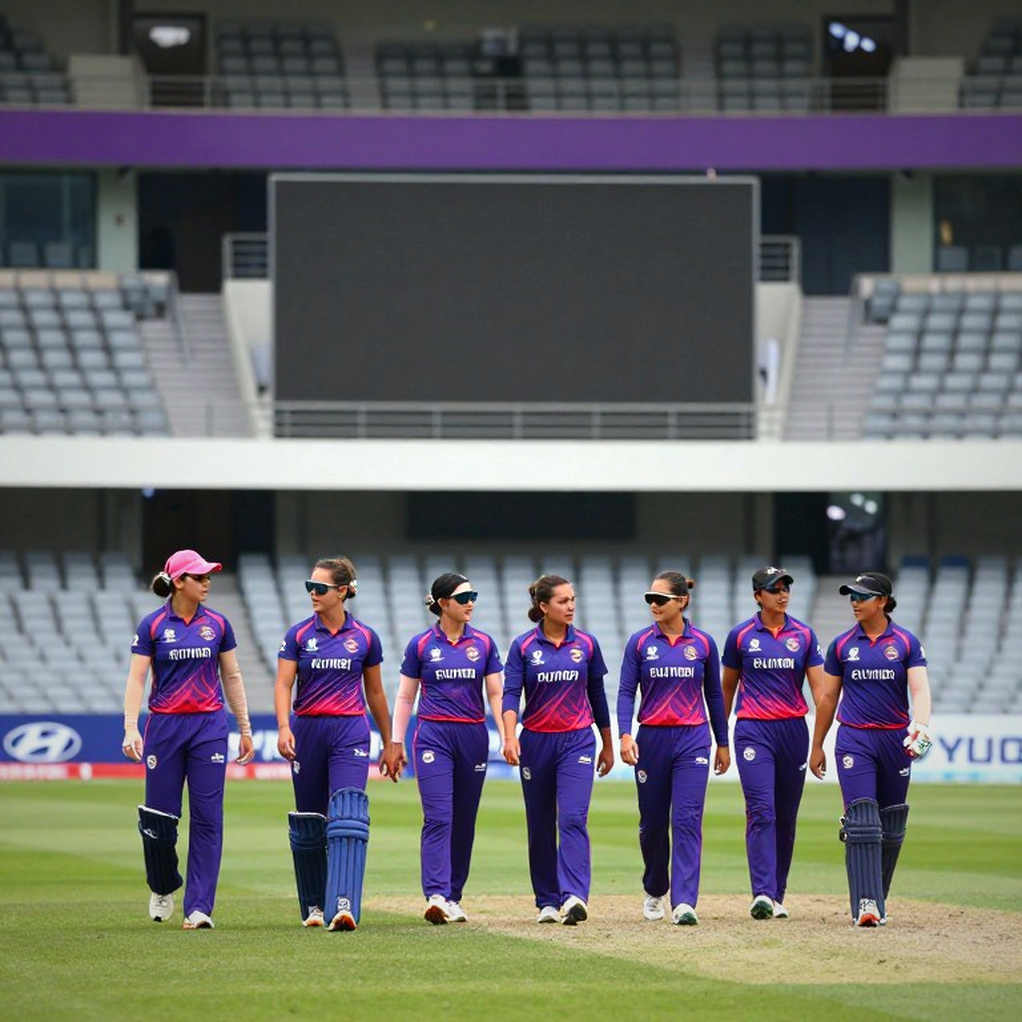
The defining image at Allan Border Field was not on the scoreboard but in the mark left by the new ball. Brisbane Heat’s 19-year-old fast bowler Lily Bassingthwaighte bowled Sri Lanka’s international power-hitter Chamari Athapaththu with the first ball. Soon afterwards, Hobart Hurricanes were 3 for 13.
This report is based on the available match report; I was not inside the ground. Even from a distance, some cricketing rhythms remain visible beyond the score. The real story was not Brisbane’s four-wicket win, but the way Hobart’s batting narrowed during the first six overs. The Hurricanes finished on 9 for 116, and the Heat reached the target with 10 balls remaining.
Context: A Low-Scoring Match Under Sustained Pressure
This was a Women’s Big Bash League season 12 domestic franchise fixture, not an international match. The result therefore needs to be read through a T20 lens. Brisbane won, but the chase was far from clean. The Heat slipped to 6 for 89 and lost three wickets for 13 runs before Annie O’Neil steadied the innings with an unbeaten 32 from 28 balls.
Her strike rate of roughly 114 would be modest for a conventional T20 finisher. In that situation, however, the Heat needed survival and accumulation more than constant boundary-hitting. O’Neil provided precisely that.
The Hurricanes produced starts without conversion. Heather Graham scored 21, Trenaman made 25 and Maddy Green contributed 24. Three batters passed 20, yet none reached 30. In T20 cricket, that pattern usually indicates an innings that avoided total collapse but never found enough acceleration.
Hobart’s circumstances also extended beyond the pitch. Regular captain Nicola Carey was absent on maternity leave, with Graham taking over as stand-in captain. That does not explain every defeat, but it is essential context for a 0-4 start.
Core Analysis: Bassingthwaighte Turned the Powerplay into a Weapon
Bassingthwaighte’s 3 for 16 from four overs was the strongest performance indicator in the match. An economy rate of 4.00 is exceptional in T20 cricket, particularly when the wickets arrive with the new ball. Bowling Athapaththu first ball was not merely the removal of a famous player; it reflected the combination of line, movement and batting pressure.
In the opening overs, batters must choose between reducing risk and using the pace to attack. Against Athapaththu, Bassingthwaighte brought the ball in tightly enough to expose the gap between bat and pad. Once the Hurricanes lost three wickets for 13, their middle order had to rebuild rather than accelerate.
That was the tactical turning point. If a side scores 13 instead of roughly 35 to 45 in the powerplay, the middle overs become an exercise in risk management. Graham, Trenaman and Green prevented a total collapse, but they could not create the momentum required to lift the innings beyond 116.
The Heat’s later bowling also suggests that the surface offered something to slower bowling. The available analysis refers to a wicket for Malgioglio, hinting that seam may have mattered early and spin later. Weather, dew and toss information are unavailable, so those factors should not be treated as confirmed explanations.
The Heat’s victory should also be handled carefully. Losing six wickets while chasing 116 exposes a fragile top order. O’Neil’s innings rescued the result, but that solution will not be available every night. Against a stronger attack, a 6 for 89 position could easily become a defeat.
Brisbane’s back-to-back wins, following a drought-breaking victory over the Strikers, give the side genuine early momentum. Yet the two victories suggest resilience more than dominance. The Heat have shown that they can win under pressure; the next step is to control matches before the pressure arrives.
Bassingthwaighte’s emergence demands the same caution. She is an Australia Under-19 T20 World Cup representative and a regular member of the Heat this season. That is a meaningful pathway signal from junior cricket to franchise cricket. A single 3 for 16, however, remains a signal rather than a completed argument. For a 19-year-old fast bowler trusted with the new ball and four overs, workload management is as important as public praise.
O’Neil’s contribution was less spectacular but more precise in context. Her 32 not out does not prove elite T20 power. It shows a batter reading the target, the pitch and the falling wickets, then limiting risk. Modern T20 value cannot always be reduced to strike rate.
Contrarian Angle: How Much of Hobart’s Crisis Is On-Field?
The 0-4 record is undeniable, and the Hurricanes’ route into the top four has already become difficult. Yet the “defending champions in crisis” frame is incomplete. The absence of a regular captain can affect communication, tactical decisions and batting-order stability. It should be treated as a structural context rather than a convenient excuse.
The same applies to Bassingthwaighte. One first-ball wicket and a 4.00 economy rate do not automatically make her Australia’s next great fast bowler. The next two or three matches will show whether this performance can be repeated or was amplified by conditions.
In eleven cities I learned that a stadium is a room with louder memories. This match will be remembered through Brisbane’s two wins and Hobart’s four defeats, although the technical story is more balanced than the headlines suggest.
Takeaway: The Next Test Is Coming
Brisbane cannot keep relying on rescue innings from players such as O’Neil to disguise top-order instability. Hobart must find clarity in its powerplay batting and interim leadership before Carey returns. Bassingthwaighte’s next spells will determine whether this was one memorable evening or the start of something larger.
Sixty nights of silence taught me to hear the game before it returns. The question now is whether Hobart can break its 0-4 quiet—and whether Bassingthwaighte can preserve her pace once the noise grows louder.